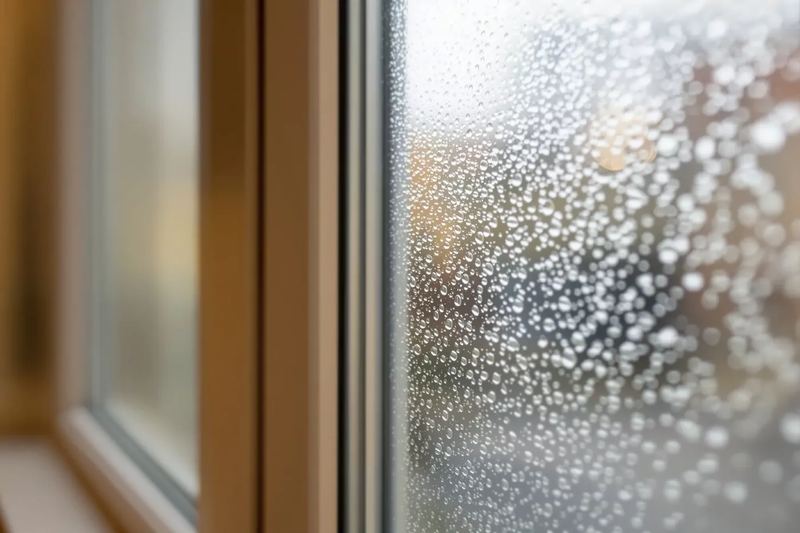
A window that fogs up is not always a problem. But to know whether yours needs attention, you first have to spot where the fog is. Three very different scenarios exist, and only one of them signals a real issue.
The three places where fog appears
1. On the inside surface — normal
It forms on the room side when the indoor air is humid: a hot shower, cooking, a dryer, several people in one room. It's a simple indoor-humidity phenomenon, not a window defect. A dehumidifier or better ventilation usually solves it.
2. On the outside surface — a good sign
This morning dew on the outside pane means your window insulates very well: it's the outside that condenses, not the inside. It's perfectly normal, even reassuring.
3. Between the panes — the real problem
When the fog is trapped between the two panes, out of reach, it's a sign that the seal has failed. It's irreversible by cleaning: the only durable solution is to replace the sealed unit.
Why fog between the panes is a problem
A modern sealed unit is two or three panes separated by a space filled with an insulating gas (usually argon), all sealed airtight. This glass "sandwich" plays a key role in Montreal's climate: it slows heat transfer, limits condensation and improves your comfort.
When the seal fails — due to age, freeze-thaw cycles or sun exposure — moisture seeps in and the argon gas escapes. The result: permanent fog, a loss of insulation and, eventually, an opaque mineral deposit that permanently dulls the glass.
Did you know?
A sealed unit that has lost its seal loses much of its insulating power. It's not just an aesthetic issue: it's literally heat escaping.
Can you remove it yourself?
No. The fog is inside the sealed unit, between the two panes. No product, cloth or cleaning can reach it. It may seem to disappear on a dry day, but it returns as soon as conditions change, because the moisture stays trapped in the space once filled with argon.
Defogging or replacement?
Defogging consists of injecting a product to mask the fog. The result is temporary — 6 to 24 months — and repairs neither the seal nor the insulation. It masks the symptom, it doesn't fix the problem.
Replacing the sealed unit, on the other hand, fixes the problem for good: clear glass, restored insulation and a written warranty. It costs a bit more than an injection, but it's a durable investment.
Repair the thermos or replace the window? is the next question to ask yourself — and the answer depends on the condition of your frame.
When to call a professional
If the fog is between the panes, if a pane is cracked or broken, or if you feel a draft near the window, it's time to act. An honest diagnosis will tell you whether a simple thermos replacement is enough, or whether the whole window deserves to be replaced.
See our thermos replacement page to learn more, or request a free quote. Thermos replacement in Montreal.